
 Skip to content
Most business owners assume that if someone visits their website, they’re interested.
Unfortunately, interest doesn’t guarantee action.
Every day, potential customers land on business websites, spend a few seconds looking around, and leave without making contact.
Not because they aren’t interested.
Not because they don’t need the service.
But because they couldn’t quickly understand what the business does, who it helps, or why they should choose it.
That’s where the 10-Second Website Test comes in.
It’s a simple exercise that can reveal whether your website is helping potential customers move forward or encouraging them to leave.
The test is simple.
Open your homepage.
Imagine you’re a first-time visitor who knows nothing about your business.
Spend just ten seconds looking at the page.
Then ask yourself three questions:
If the answers aren’t immediately obvious, there’s a good chance your visitors are experiencing the same confusion.
The reality is that website visitors don’t carefully analyse every page.
They scan.
They make quick judgements.
And they decide very quickly whether it’s worth investing more of their time.
Think about how you use websites yourself.
When searching for a service, you’re likely comparing multiple businesses.
If one website immediately provides clarity and confidence while another feels confusing, which one are you more likely to contact?
Most customers make decisions based on:
Before they enquire, visitors want reassurance that they’ve found the right business.
If they have to work too hard to understand your offering, many won’t stay long enough to discover how good your service actually is.
A homepage doesn’t need to tell your entire business story.
Its primary role is to provide immediate clarity.
Within a few seconds, visitors should understand:
This sounds obvious, but many websites focus on clever slogans rather than clear explanations.
For example:
“Helping Businesses Grow”
sounds appealing.
But it doesn’t explain what the business actually does.
A clearer alternative might be:
“Bookkeeping and Business Support Services for Australian SMEs.”
Specificity reduces confusion.
Not every customer is your ideal customer.
The sooner visitors recognise that your business serves people like them, the more likely they are to engage.
Examples include:
Clear audience identification builds relevance.
What makes your business worth contacting?
This isn’t necessarily about being the cheapest or biggest.
It could be:
Visitors need a reason to keep reading.
Many websites struggle with the 10-Second Test because they prioritise design over communication.
Some common issues include:
Leading With Company Information
Customers are usually thinking about their own problems, not your company history.
Your homepage should focus on how you help them.
Too Much Information
Trying to communicate everything at once often results in visitors understanding nothing.
Simplicity creates clarity.
Weak Headlines
Your main headline should immediately explain what you do.
Generic statements often create uncertainty.
No Clear Next Step
Once visitors understand your business, they need guidance.
Do you want them to:
• Call?
• Complete an enquiry form?
• Book a consultation?
• Request a quote?
The next step should be obvious.
The good news is that improving website clarity doesn’t always require rebuilding your entire website.
Often, small changes can make a significant difference.
Start by reviewing:
Your Homepage Headline
Can a stranger immediately understand your service offering?
Your Value Proposition
Does your website clearly explain why customers should choose you?
Your Call To Action
Is it easy to know what to do next?
Mobile Experience
Many visitors will view your website on a phone.
Important information should be visible without excessive scrolling.
Social Proof
Reviews, testimonials, and case studies help build trust quickly.
Sometimes a fresh set of eyes can identify confusion that business owners no longer notice because they’re too familiar with their own website.
Try The Test Today
The 10-Second Website Test takes less than a minute.
Yet it can reveal issues that may be quietly costing your business enquiries.
Open your homepage.
Spend ten seconds looking at it.
Then honestly ask:
Can a stranger immediately identify:
If the answer is yes, you’re already ahead of many businesses.
If the answer is no, you’ve identified an opportunity to improve.
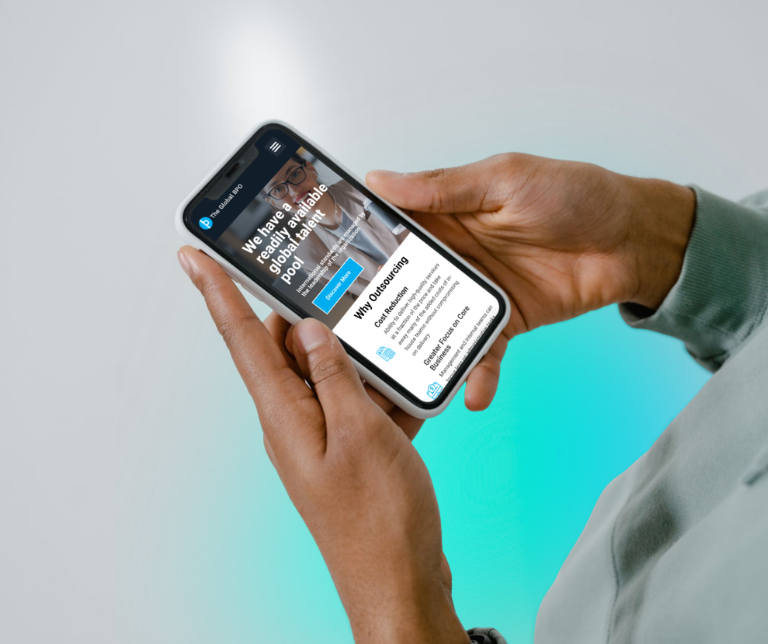
A website doesn’t need to be complicated to be effective.
In many cases, the highest-converting websites are simply the clearest.
The businesses that generate consistent enquiries are often the ones that communicate their value quickly, clearly, and confidently.
If visitors can’t understand your business within a few seconds, they may never stay long enough to discover what makes you different.
At The Global BPO, we help Australian businesses improve their digital presence through strategic website reviews, digital marketing support, and content that communicates value clearly.
To learn more, visit www.theglobalbpo.com.